Khomphyutha dza Rulete
Nḓila ine khomphiyutha ya ela ngayo tshifhinga tsha bola, vhane vha fhaṱa dza u thoma, na uri i fanela u vha yo teaho hani.
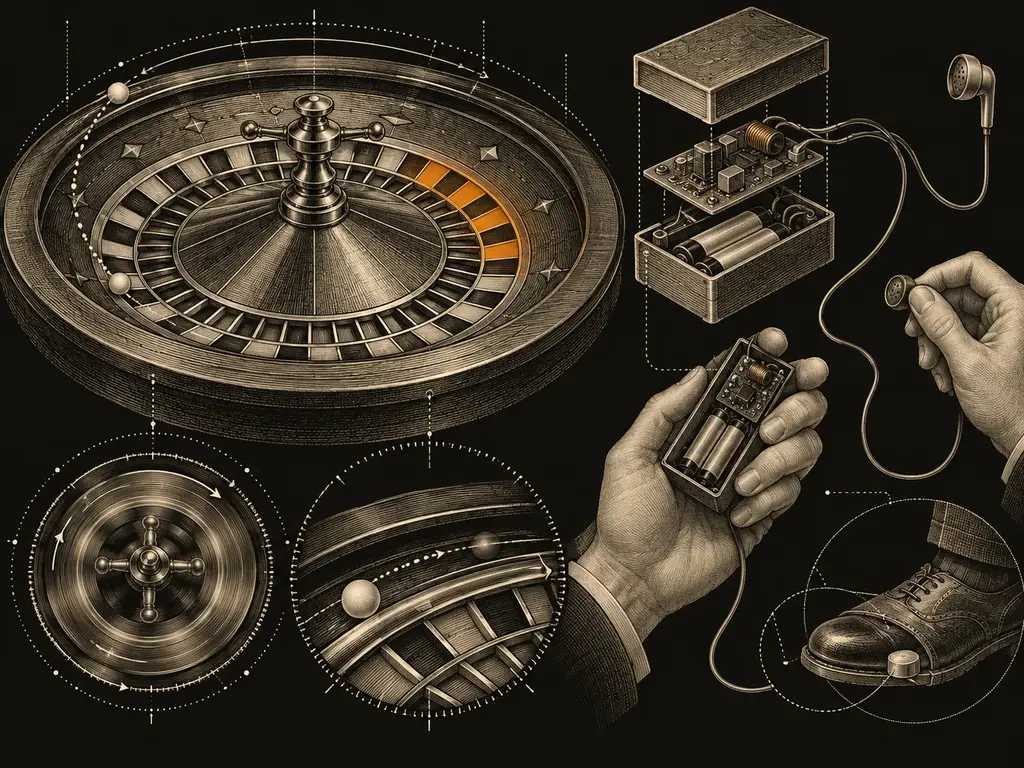
Khomphiyutha ya rulete i ela tshifhinga tsha bola na rotara kha sekondo dza u thoma dza mumono nahone i amba tshipiḓa tsha vhili tshine bola ya fanela u wela khatsho. Edward Thorp na Claude Shannon vho fhaṱa ya u thoma nga 1961, nahone Vha-Eudaemons vho fhaṱa dza didzhithala u bva nga 1976. Nḓila iyi i ṱoḓa dzibete dzi ṱanganedzwaho nga murahu ha u posa: zwiṱudio zwa tshifhinga tsha zwino ṋamusi zwi vala u vhea bete musi bola i tshi posiwa, nahone Nevada yo iledza zwishumiswa zwa u ralo u bva nga 1985.
Nḓila ye sisiṱeme ya u thoma ya khomphiyutha ya rulete ya fhaṱiwa ngayo
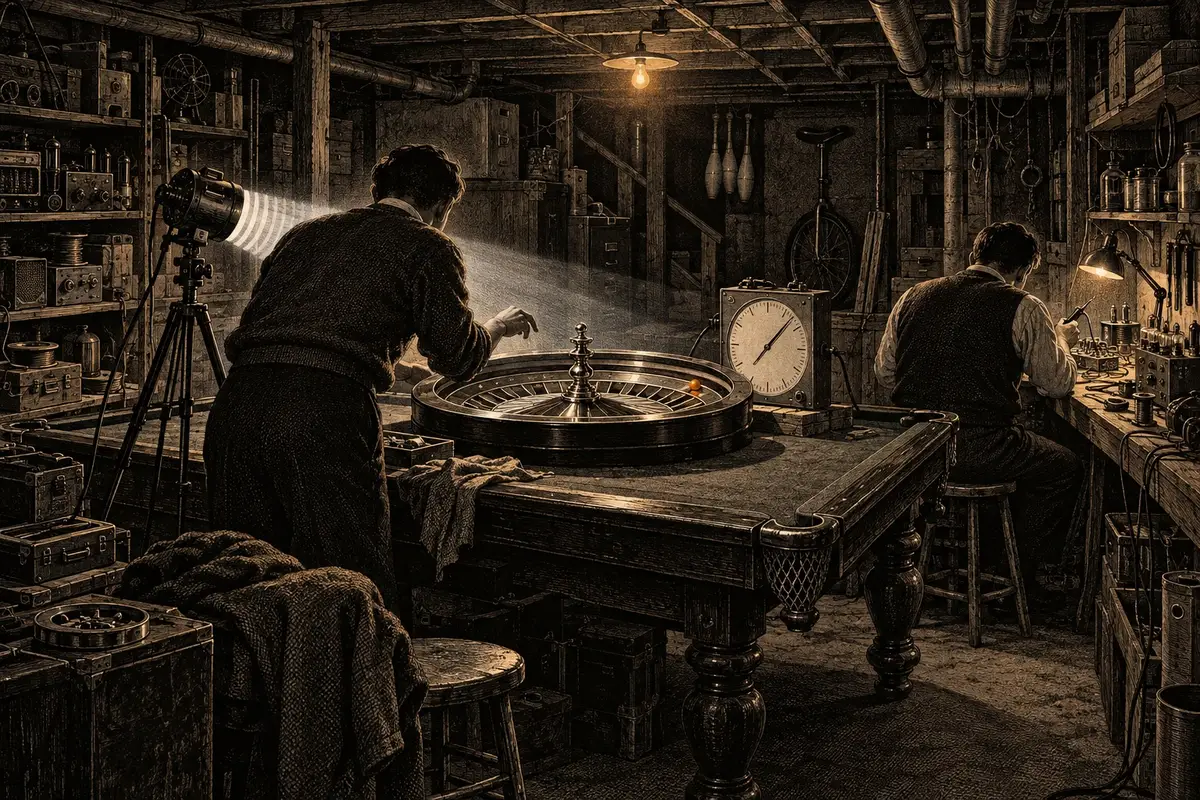
In his 1998 account, Edward Thorp dates the idea to 1955 and describes working with Claude Shannon at MIT in 1960–61. They studied a regulation wheel on a slate billiard table in Shannon’s basement, using a clock and strobe light to improve their timing.
By June 1961 they had a cigarette-pack-sized analog computer with twelve transistors. Toe-operated switches timed the ballzwishumiswaBolaBola ṱhukhu ine ya poswa kha nḓila nga thungo yo fhambanaho na rotara. Bola dza ano maḓuvha dzi itwa nga ivorine kana Teflon, 18–21 mm.Vhalani zwoṱhe → and rotorzwishumiswaRotaraTshipiḓa tsha vhili tshine tsha mona nahone tsho fara mabuli.Vhalani zwoṱhe →; tones identified one of eight sectorsvhiliTshipiḓaMabuli a tevhekanaho kha vhili, a ita tshipiḓa tsha tshiṱuluwa, zwi fhambanaho na tshigwada kha mapa wa tafula.Vhalani zwoṱhe → to bet on. Thorp reports testing it in Las Vegas that summer with ten-cent chipstsheledeTshipisiTshiga tshine tsha imela tshelede yo tiwaho, tshi vhewaho kha mapa wa tafula u vhea bete. Tshi dovha tsha vhidzwa: check.Vhalani zwoṱhe →. Repeated breaks in the earpiece wires prevented sustained serious betting. Distance and competing work later kept the project from continuing.
This is the inventor’s retrospective account, not an independent casino trial report. His 1969 paper gives 1957 for the initial idea; the later account gives 1955. Both describe work completed by 1961.
Khomphiyutha dza u thoma dza didzhithala
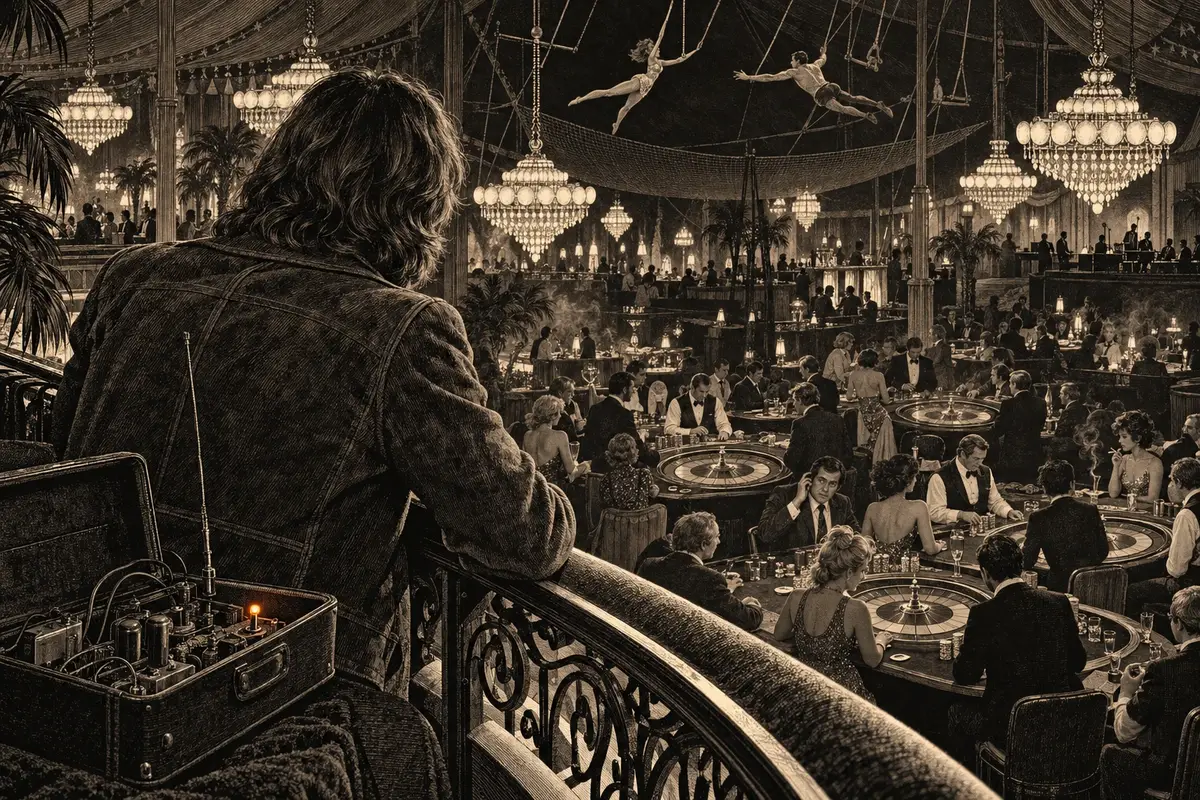
Mutshini wa Thorp na Shannon wo vha u wa analogo: sekhethe yawo yo vha i mbekanyamushumo yawo, nahone u shandukisa nḓila zwo vha zwi tshi amba u u lumanya hafhu. Maikhiroprosesa yo bvisa uwo mukano. Alan Lewis, muithuti ngei Caltech, o dzhia khomphiyutha ya didzhithala ye a i ita hayani yo vha i kha bogisi ḽa khamera a i isa Circus Circus ngei Las Vegas nga 1972, a ela tshifhinga tsha mavhili a tshi bva kha baḽakhoni nṱha ha dzitafula, a rumela zwo vhonwaho phanḓa nga radio kha mukonani wawe o vha e fhasi. Yo shuma, fhedzi a i ngo wana tshelede; nga murahu o ḓivha uri o vha o sia u kotama ha vhili. U bva nga 1976 tshigwada tsha vhaithuti vha fiziki ngei Santa Cruz, Vha-Eudaemons, tsho ita mushumo uyo nga vhuḓalo. Vho renga vhili ḽa khasino, vha ela bola, rotara, u kotama na u fhufha, vha ṅwala ekhweshini dzi re na zwiimiso zwiṱanu zwine mutambi a zwi lugisa kha vhili ḽiṅwe na ḽiṅwe nga u kiḽika switshi dza minwe ya milenzhe lwa minithi i ṱoḓaho u vha fumbili a sa athu u vhea bete. Khomphiyutha yavho yo amba tshiṅwe tsha zwipiḓa zwa malo nga murahu ha sekondo dzi si gathi dza mumono. Kha tafula ya vhukuma nga Phando 1978 yo ṋea mbuelo ye vha i vhalela kha 25%; zwishumiswa, zwo vha zwo tamelwa muvhilini nahone nga murahu zwa fhaṱelwa ngomu ha zwienda, zwo kundelwa kanzhi vhukuma u fhira fiziki (sedzani Vha-Eudaemons).
Ndi ngani dzibete dza nga murahu dzo vha dzi na ndeme
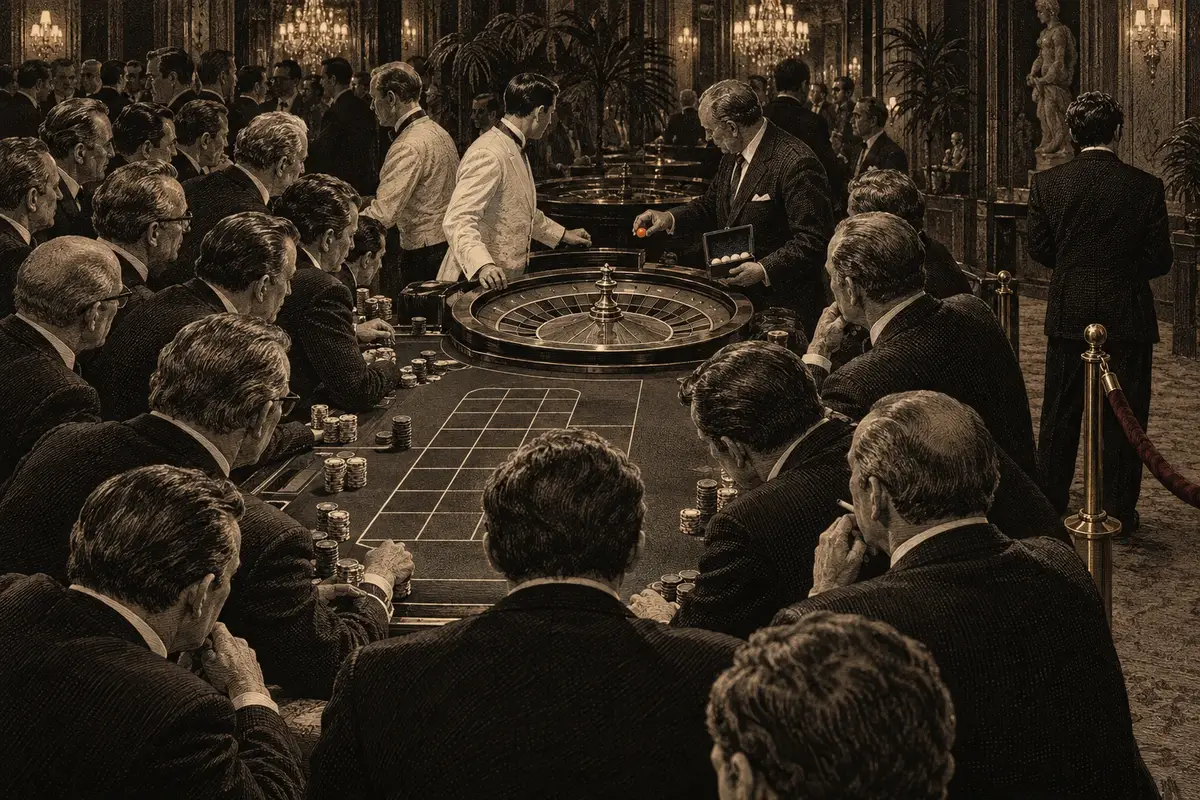
A strategy that measures the current spin cannot use those measurements if betting has already closed. Thorp’s account describes late betting in games he observed, not every modern studio. Nevada’s device provision dates to 1985; its current wording includes an approval exception.
Nḓila ye dzikhasino dza lwa ngayo
A predictor fitted to one setup needs fresh validation when the wheel, ball or operating conditions change. A change does not by itself prove that prediction has become impossible; what matters is the resulting prediction error and whether it still supports the proposed bet.
In his 1998 account, Thorp identifies closing bets before launch as a way to prevent his method from using the current spin. This is a constraint on that method, not evidence that every casino follows the same procedure. Check the actual betting deadline rather than assuming that a historical account describes today’s game.
Naa Vhakurupiye vha Rulete vha Nga Livhisa Bola kha Nomboro? Ngano
U vhona phanḓa hu fanela u vha havhuḓi hani
The table uses a mathematical model: prediction error is a centered normal distribution wrapped around 37 pocketszwishumiswaBuliḼiṅwe ḽa mabuli a 37 o ṅwalwaho nomboro kha rotara. Ḽi dovha ḽa vhidzwa: slot, cup.Vhalani zwoṱhe →, each one unittsheledeYunitiTshelede ya bete ya mutheo ine sisiṱeme kana mutambi a shuma ngayo. Nyengedzo dza bete dzi ṱalutshedzwa nga dziyuniti uri dzi shume kha tafula iṅwe na iṅwe.Vhalani zwoṱhe → wide. Expected return follows by integrating the selected pocket interval and applying 35:1 payoutstsheledeMbadeloZwine bete yo kundaho ya humisa, zwi tshi ambiwa sa “X kha 1” nṱha ha tshelede ya bete i humiswaho.Vhalani zwoṱhe →. This is a model illustration, not measured accuracy for a current device. At σ = 10 it gives about +43.9% for one pocket or +42.5% for five centered pockets. Break-evenmathematikiVhuimo ha u linganaVhuimo hune ndeme yo lavhelelwaho ya bete ya vha ziro tshoṱhe, ngauralo a hu na thungo i re na mbuelo. Kanzhi ndi mbadelo kana saizi ya jakhiphothi.Vhalani zwoṱhe → is about 17.22 pockets for one and 17.16 for five. A different error distribution gives different values.
Mbudziso
Hai. A hu na bola. Nomboro i nangiwa nga sofuthiwea phanḓa ha tshifanyiso tshi tshimbilaho.
Dzi nga vha khomboni ya u elwa tshifhinga, ndi ngazwo hu si na na nthihi i shumaho nga u ralo.
Mathematiki ya u ḓiphina
Lingedzani hedzi nga inwi vhaṋe u thoma. Phindulo iṅwe na iṅwe yo dzumbiwa; i voreni musi no no ḓilugisa.
Bete ya u vhidzwa ya vhahurabeteVhahuraNomboro na mabuli mavhili kha thungo iṅwe na iṅwe yayo kha vhili, zwipisi zwiṱanu zwa bete ya nomboro nthihi.Vhalani zwoṱhe → i vhea tshipisitsheledeTshipisiTshiga tshine tsha imela tshelede yo tiwaho, tshi vhewaho kha mapa wa tafula u vhea bete. Tshi dovha tsha vhidzwa: check.Vhalani zwoṱhe → tshithihi kha nomboro na kha mabulizwishumiswaBuliḼiṅwe ḽa mabuli a 37 o ṅwalwaho nomboro kha rotara. Ḽi dovha ḽa vhidzwa: slot, cup.Vhalani zwoṱhe → mavhili a re kha thungo iṅwe na iṅwe yayo kha vhili: zwipisi zwiṱhanu. U humbulela hu fanela u wela kha ayo mabuli maṱhanu kangana uri hu swike kha vhuimo ha u lingana, nahone hu wana mini arali hu tshi vha ho lugaho luthihi kha luṱhanu?
Sumbedzani phindulo
Phindulo Hu swika kha vhuimo ha u lingana nga 5 kha 36, 13.9%, u fhambana na 13.5% nga khonadzeo fhedzi. Musi hu ho lugaho luthihi kha luṱhanu, hu humisa 44% u fhira zwe ha vhewa.
If the call hits, one chip wins 35 to 1 and comes back with its winnings, 36 chips, and the other four are lost. So a hit returns 36 for 5 staked, and the call breaks even if it hits 5 times in 36, 13.9%. By chance it hits 5 times in 37, 13.5%. That small gap, less than half a percentage point, is where the whole 2.70% comes from.
At one hit in five, 0.2 × 36 = 7.2 chips come back for every 5 staked, +44%. At one in four, +80%.
These are expected returns under the stated success probabilities and payoutstsheledeMbadeloZwine bete yo kundaho ya humisa, zwi tshi ambiwa sa “X kha 1” nṱha ha tshelede ya bete i humiswaho.Vhalani zwoṱhe →. A prediction would need independently measured accuracy; this calculation does not establish that any device or player achieves it.
Consider four independent, zerovhiliZiroBuli ḽithihi ḽa muvhala wa tala ḽine ḽa sa farwe nga bete ya tshelede i linganaho, ya dazini kana ya kholomu; ndi tshisima tsha mbuelo ya khasino. Ḽi dovha ḽa vhidzwa: ziro nthihi, 0.Vhalani zwoṱhe →-mean prediction errors whose standard deviationsmathematikiPhambuwo ya tshiṱandadiMudzi wa tshikwea wa vhariantsi; tshikhala tsha ḓuvha ḽiṅwe na ḽiṅwe vhukati ha mvelelo na ndeme yo lavhelelwaho.Vhalani zwoṱhe →, measured in pockets, are 1.4, 5.5, 7 and 6. The first two represent timing errors. What is the combined standard deviation, and how much would eliminating both timing errors reduce it?
Sumbedzani phindulo
Phindulo Hu ṱoḓa u vha mabuli a 10.8 oṱhe. Hu si na vhukhakhi ha u ela tshifhinga zwi nga vha 9.2, ngauralo u ela tshifhinga huvhili hu engedza 1.6 fhedzi.
For independent errors, variancesmathematikiVhariantsiTshielo tsha uri mvelelo dzo phaḓalala nga hani u mona na ndeme yo lavhelelwaho. I nṱha kha bete ya nomboro nthihi, i fhasi kha dzibete dza tshelede i linganaho.Vhalani zwoṱhe → add. The combined standard deviation is √(1.4² + 5.5² + 7² + 6²) = √117.21 ≈ 10.83 pockets.
Without the timing errors it is √(7² + 6²) = √85 ≈ 9.22 pockets. The reduction is about 1.61 pockets, not 1.4 + 5.5.
This is a hypothetical error budget. Correlated errors require covariance terms, and a standard deviation alone does not determine a prediction’s hit rate or betting return.
Zwa u sea
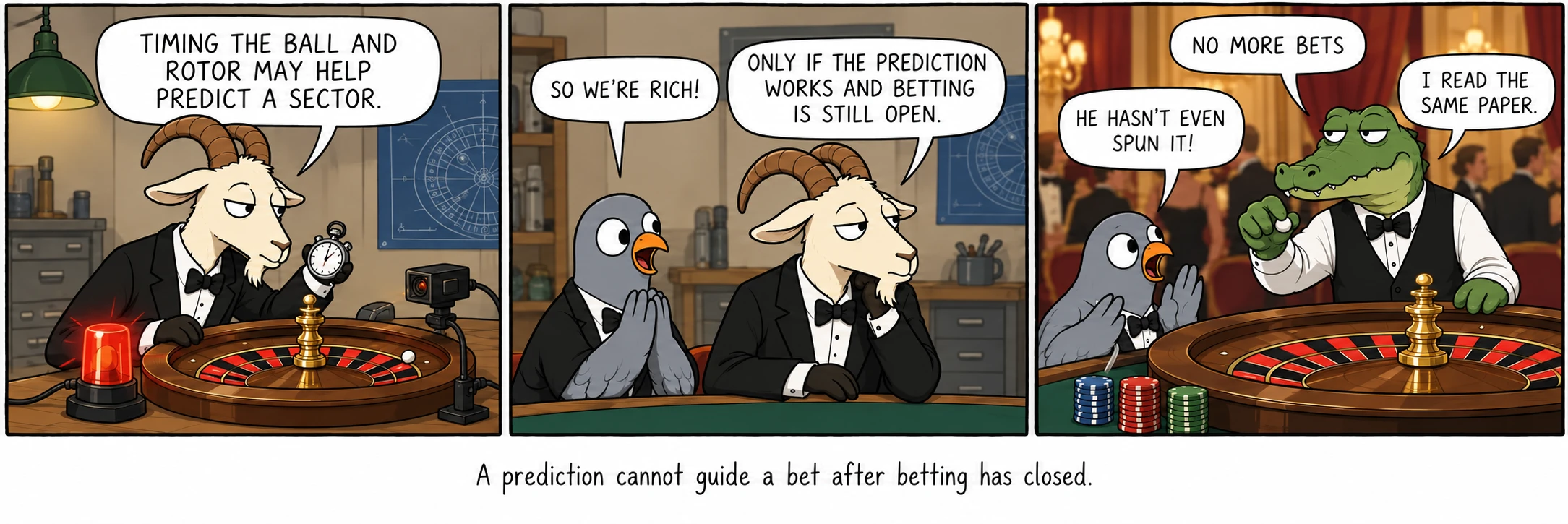
Fiziki i a shuma. Tshifhinga tsha u vhea bete tsho valwa.
Zwiko
- Thorp, E. O. “Optimal gambling systems for favorable games.”
- Thorp, E. O. The Mathematics of Gambling.
- Thorp, E. O. “The invention of the first wearable computer.”
- Bass, T. A. The Eudaemonic Pie.
- Small, M. & Tse, C. K. “Predicting the outcome of roulette.”
- Goldman, N. Great Gambling Scams.
- Nevada Revised Statutes, chapter 465.
- Edward O. Thorp, The Invention of the First Wearable Computer
- Nevada Revised Statutes 465.075 — zwo ṱolwa nga 15 Ḽara 2026
- Bradley Rhodes, A brief history of wearable computing
- J. Doyne Farmer, Roulette
- Heinz Nixdorf MuseumsForum, Shoe computer