Roulettenburg ya Dostoevsky
The Gambler (1866): bugu ya khwinesa nga ha rulete, yo ṅwalwaho nga munna we a vha a tshi khou lozwa khayo, nga maḓuvha a fumbili na rathi.
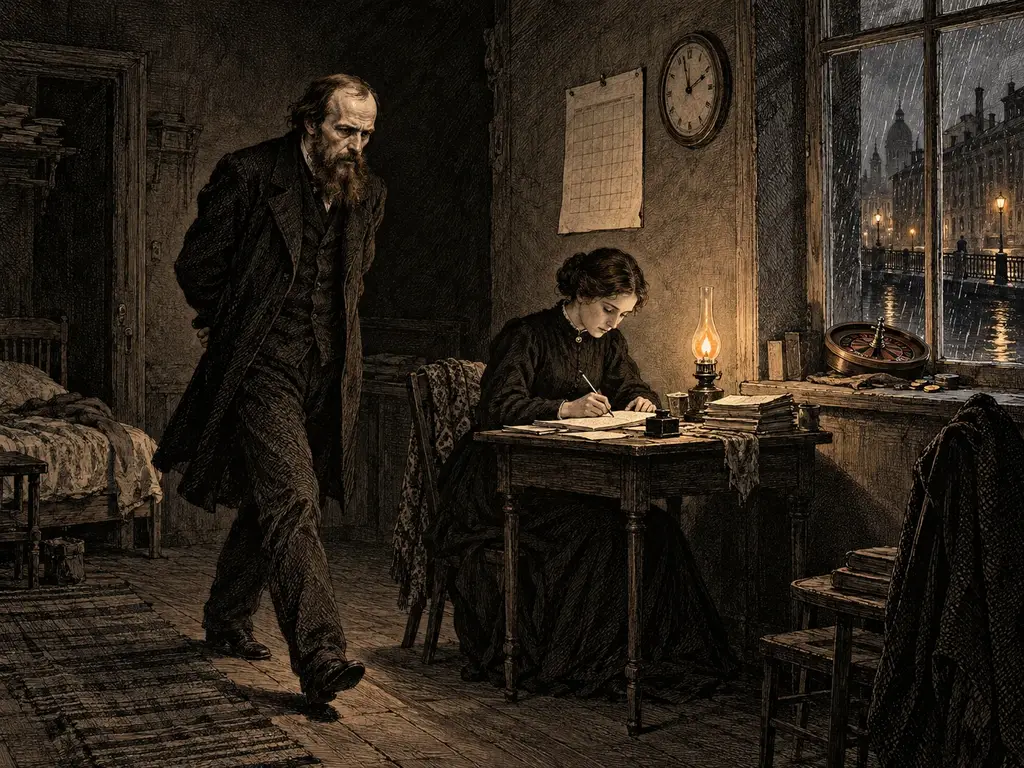
Dostoevsky o ṅwalisa The Gambler u itela u badela zwikolodo zwe a vha nazwo nga ṅwambo wa dzitafula dza Wiesbaden na Homburg. Muanetsheli wayo Alexei u ṱalutshedza khasino ya fhethu ha maḓi a u fhodza, sisiṱeme, u fulufhela uri tshitevhekano tshi fanela u fhela na u pfa u kunda sa u pfesesa, nga u ṱalutshedza zwi zwone tshoṱhe hu songo vhuya ha khwiniswa nga mudivhi wa mathematiki.
Zwiimo
Nga 1866 Dostoevsky o vha a tshi fanela u ṋea mugandisi nganea nga 1 Ḽara kana a xelelwa nga pfanelo dza mishumo yawe lwa miṅwaha ya ṱahe. O vha o lozwa zwihulu kha rulete kha ḓorobo dza maḓi a u fhodza dza Dzhamani nga 1863 na 1865, a tshi isa thundu dzawe na zwiṋamelo zwa mufumakadzi wawe kha vhafhumudzi. O hira muṅwali wa zwi ambiwaho, Anna Snitkina, nahone a ṅwalisa The Gambler vhukati ha 4 na 29 Tshimedzi, a fhedza hu tshi kha ḓi sala maḓuvha. O vhinga Anna ṅwaha wo tevhelaho. O bvela phanḓa u gembula u swika nga 1871, nga murahu a litsha tshoṱhe.
Roulettenburg
The resort supplies a shared social setting for relatives, visitors and gamblers. Spellings of its name vary by translation. Fiction can vividly portray a gambling table without certifying every historical rule or every belief expressed by a character.
Makhulu
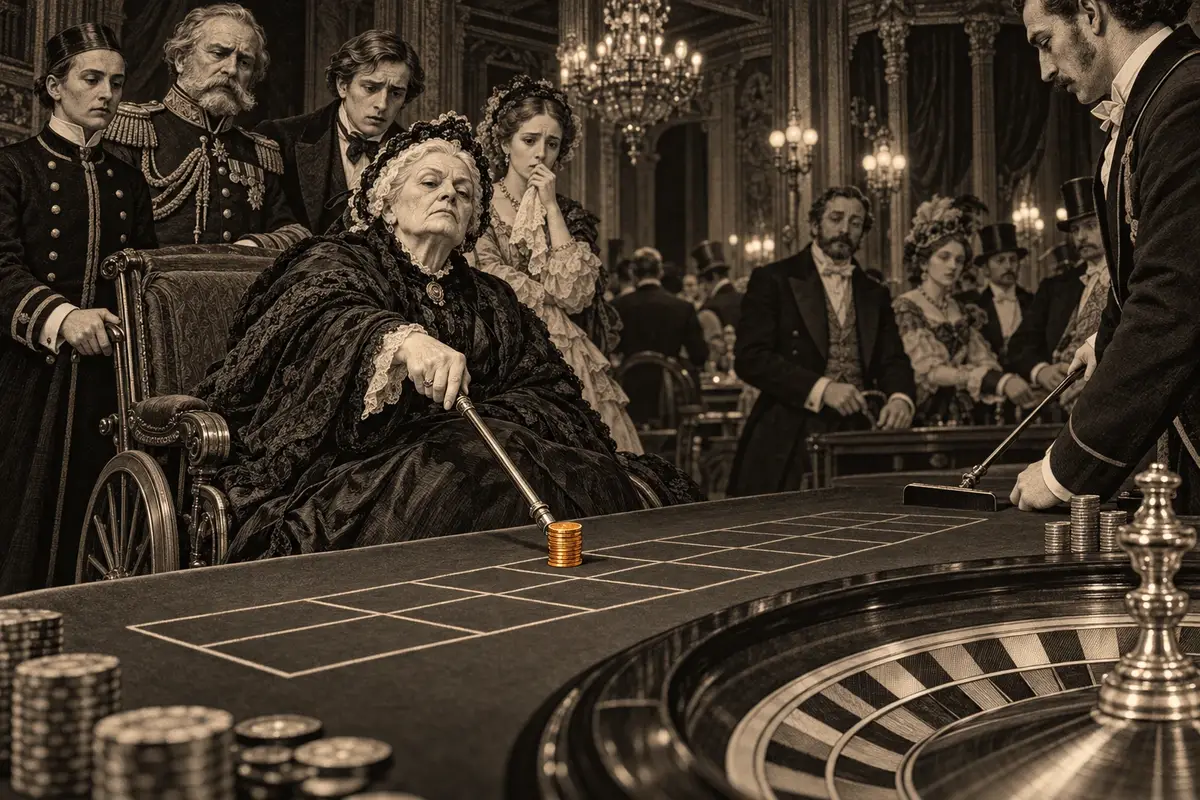
In chapters IX and XII, the grandmother’s enthusiasm for zerovhiliZiroBuli ḽithihi ḽa muvhala wa tala ḽine ḽa sa farwe nga bete ya tshelede i linganaho, ya dazini kana ya kholomu; ndi tshisima tsha mbuelo ya khasino. Ḽi dovha ḽa vhidzwa: ziro nthihi, 0.Vhalani zwoṱhe → leads to repeated bets and frustration. She also switches to redbeteTswukuBete ya tshelede i linganaho kha nomboro dza 18 tswuku. Nga Lufurantsi: rouge.Vhalani zwoṱhe →: her losses are not simply one uninterrupted series of straight-up wagers on zero. Alexei’s own warnings sometimes treat recent outcomes as reasons to expect a different result next.
U kunda ha Alexei
Alexei reports winnings of two hundred thousand francs, then spends the money in Paris with Blanche. The contrast invites a literary reading about what winning does to him; it does not establish a medical diagnosis or prove that a successful session reveals skill.
Ndi ngani i bugu ya khwinesa nga ha rulete
For comparison, consider a modern independent, uniform, single-zero model. Zero has probabilitymathematikiKhonadzeoKhonadzeo ya mvelelo, u bva kha 0 u ya kha 1 kana 0% u ya kha 100%. Nomboro nthihi: 1/37 = 2.70%.Vhalani zwoṱhe → 1/37 on each spin, whether it has just appeared or has been absent for many rounds. A standard 35:1 straight-up payouttsheledeMbadeloZwine bete yo kundaho ya humisa, zwi tshi ambiwa sa “X kha 1” nṱha ha tshelede ya bete i humiswaho.Vhalani zwoṱhe → has expected net return −1/37 per unittsheledeYunitiTshelede ya bete ya mutheo ine sisiṱeme kana mutambi a shuma ngayo. Nyengedzo dza bete dzi ṱalutshedzwa nga dziyuniti uri dzi shume kha tafula iṅwe na iṅwe.Vhalani zwoṱhe →. Those are assumptions and calculations for the model, not a claim that every detail of the novel exactly matches a current table.
Mbudziso
O vha a tshi fulufhela u ḓifara: uri mutambi o dzikaho a nga si lozwe. Ndi u ḓivhona u tshi langa, nahone o zwi ṱalutshedza u fhira muṅwe na muṅwe musi e na lutendo ulwo.
Ndi fhethu ho ṱanganywaho. Wiesbaden ndi yone tsumbo khulwane.
I pfufhi: madekwana malapfu. I vhaleni phanḓa ha seshini yaṋu i tevhelaho, hu si nga murahu.
Zwa u sea
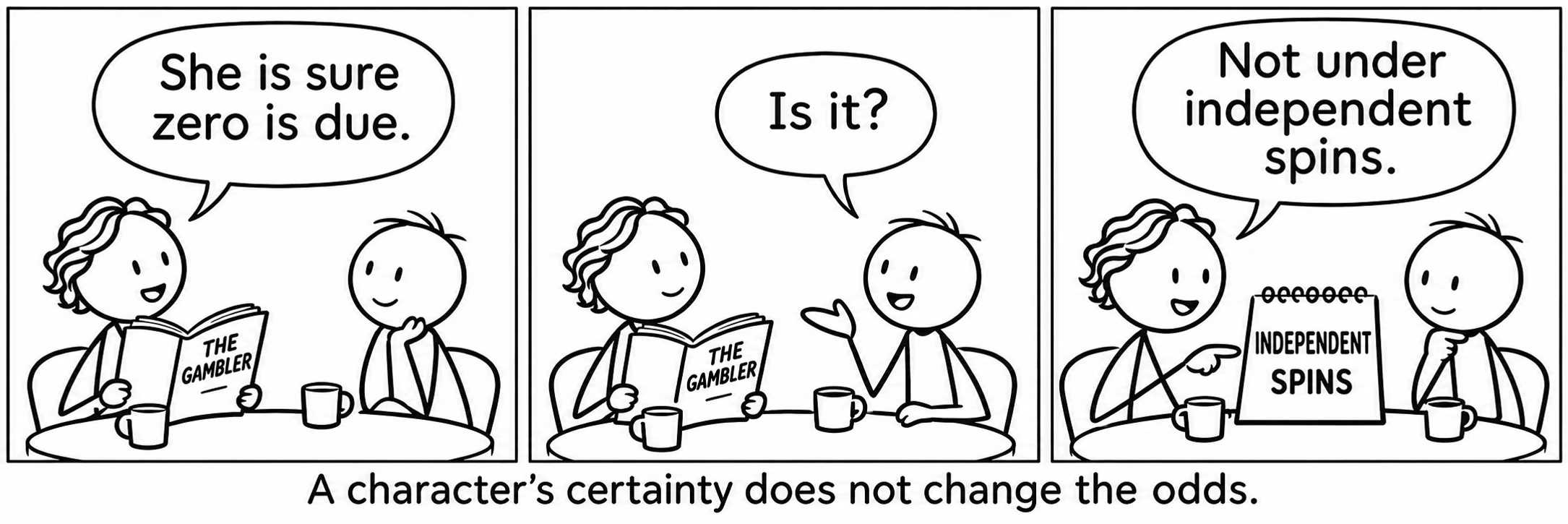
O ṱalutshedza vhukhakhi zwavhuḓi tshoṱhe a tshi khou vhu fulufhela. Ndi yone bugu.
Zwiko
- Dostoevsky, F. The Gambler.